Adam Shostack Unveils PHANTOM-B for LLM Security
Introduction
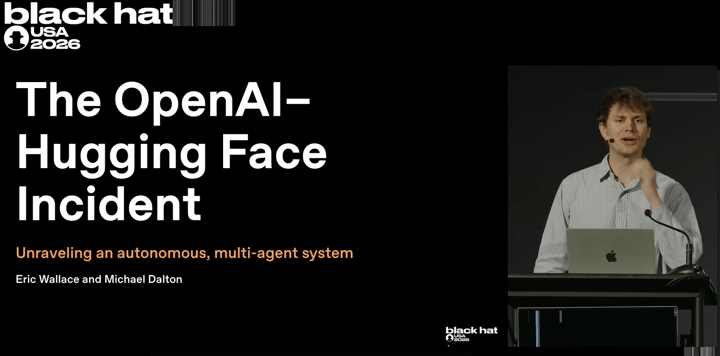
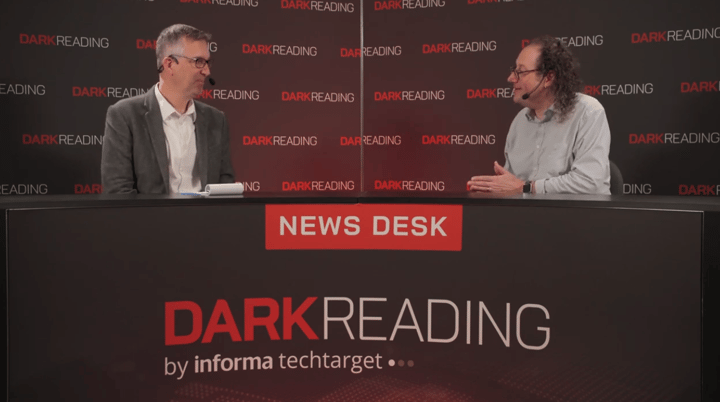
When a pioneer in the field of threat modeling speaks, the cybersecurity industry listens. Adam Shostack, author of the seminal text Threat Modeling: Designing for Security and a longtime advocate for structured security thinking, recently turned his attention to the chaotic frontier of Generative AI. In a detailed technical discussion, Shostack dissected the recent security events surrounding Hugging Face—the central hub for open-source machine learning models—revealing he was "blown away" by the depth of the compromises uncovered.
But Shostack didn't stop at analysis. He introduced PHANTOM-B, a novel threat modeling framework engineered specifically for Large Language Models (LLMs). Designed to be "lightweight yet still usable," this methodology aims to bridge the gap between academic security theory and the breakneck speed of AI deployment. For organizations rushing to integrate LLMs into critical workflows, Shostack's insights offer a rare thing: a practical map for navigating uncharted threat territory.
The Hugging Face Wake-Up Call: Supply Chain Fragility
The Hugging Face platform has effectively become the "GitHub of AI," hosting hundreds of thousands of models, datasets, and demo applications (Spaces). This centralization creates a massive single point of failure. The recent security revelations—specifically the discovery of malicious models capable of executing arbitrary code upon load and the exposure of secrets within Spaces—validated the worst fears of supply chain security experts.
Shostack highlighted that the attack surface isn't just about malicious code injection. It extends to:
- Model Serialization Formats: Formats like Pickle allow arbitrary code execution during deserialization, a known risk often ignored for convenience.
- Dependency Confusion: The complex web of Python dependencies in ML environments creates fertile ground for typosquatting and compromised packages.
- Secrets Sprawl: API keys, database credentials, and cloud tokens hardcoded in Spaces or training scripts turn public repos into credential databases for attackers.
What makes this particularly dangerous, Shostack argues, is the trust model. Developers often treat models as data artifacts rather than executable software, bypassing standard code review and sandboxing processes. This cognitive blind spot is exactly where PHANTOM-B aims to intervene.
Deconstructing PHANTOM-B: A Mnemonic for the AI Age
Traditional threat modeling frameworks like STRIDE (Spoofing, Tampering, Repudiation, Information Disclosure, Denial of Service, Elevation of Privilege) were designed for traditional software architectures. They struggle to encapsulate the unique properties of LLMs: non-determinism, prompt injection, training data extraction, and the blurred line between data and instruction.
PHANTOM-B restructures the analysis around the specific lifecycle of an LLM system. The acronym stands for:
- Prompt Injection & Manipulation
- Hallucination & Integrity Failures
- Agentic Action & Tool Use Abuse
- Non-Determinism & Consistency Risks
- Training Data & Privacy Leakage
- Offloading & Supply Chain Compromise
- Model Theft & Intellectual Property
- Bias, Safety & Alignment Drift
The framework's genius lies in its usability. Instead of requiring a week-long workshop, PHANTOM-B encourages developers to run through the mnemonic during sprint planning or architecture reviews. It shifts threat modeling from a "gate" to a "guardrail," allowing teams to identify high-impact risks—like an agentic LLM having write access to a production database—before code ships.
Lightweight Does Not Mean Light: Operationalizing the Model
Shostack emphasized that "lightweight" refers to cognitive load and process friction, not analytical depth. PHANTOM-B integrates directly into existing developer workflows. It maps specific mitigations to each category:
- For Prompt Injection: Implement strict input/output validation, separation of control and data planes, and instruction hierarchy enforcement.
- For Agentic Abuse: Apply the principle of least privilege to tool definitions; sandbox code execution environments rigorously.
- For Supply Chain (Offloading): Enforce model signing, SBOM (Software Bill of Materials) generation for models, and runtime verification of model hashes.
This practical mapping is critical. Many organizations currently treat LLM security as purely a "red teaming" exercise—penetration testing the chat interface. Shostack argues this is reactive. PHANTOM-B enables proactive design decisions, such as choosing a smaller, locally hosted model over a massive API-dependent one to mitigate the 'Offloading' and 'Training Data' vectors simultaneously.
Grivyonx Expert Analysis
The industry is currently suffering from "LLM Exceptionalism"—the belief that AI systems are too novel for traditional security engineering. Adam Shostack's PHANTOM-B is the antidote. By adapting the rigorous discipline of threat modeling to the specific semantics of Generative AI, he provides a taxonomy that CISOs and developers can actually agree on. At Grivyonx Cloud, we observe that organizations failing to model threats at the architecture phase of LLM integration inevitably face costly retrofits when prompt injection or agentic runaway incidents occur in production. PHANTOM-B's focus on 'Offloading' (Supply Chain) is particularly prescient; the Hugging Face incident proves that the model artifact itself is now a primary attack vector. We strongly recommend integrating this mnemonic into your Secure SDLC gates immediately.
Conclusion
The conversation around AI security has long been dominated by either theoretical doomsaying or vendor marketing fluff. Adam Shostack’s contribution cuts through the noise. By analyzing the Hugging Face incident not as an anomaly but as a symptom of systemic architectural gaps, and by delivering PHANTOM-B as a pragmatic countermeasure, he has given the industry a tool that respects both the complexity of the technology and the velocity of modern business.
Securing the AI supply chain requires more than scanning containers; it demands a mental model for how data becomes behavior in non-deterministic systems. As enterprises move from "chatbot pilots" to "autonomous agents" controlling infrastructure and finance, the stakes shift from reputational damage to operational catastrophe. Adopting structured frameworks like PHANTOM-B today is the most cost-effective insurance policy against the unknown unknowns of tomorrow. For teams looking to automate the detection and mitigation of these exact threat vectors across their cloud estate, Grivyonx Cloud’s AI-driven cyber intelligence platform offers continuous validation aligned with these very principles.
- #Adam Shostack
- #Threat Modeling
- #LLM Security
- #Hugging Face
- #PHANTOM-B
- #AI Security
- #Cybersecurity