Africa Retakes Top Spot as Most Attacked Region
Introduction
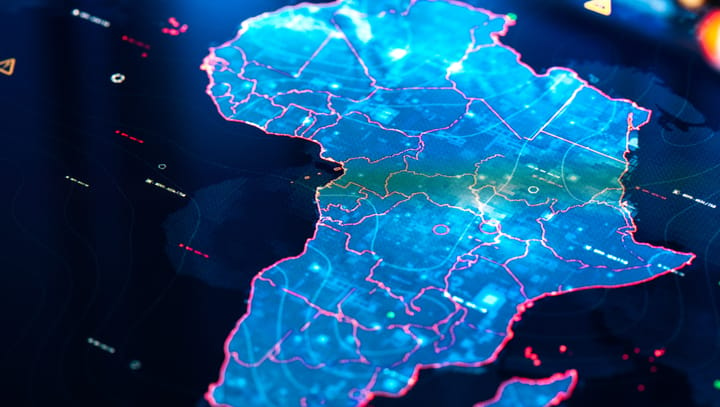
Africa has retaken the top spot as the world's most attacked region, according to recent threat data, and Nigeria is leading the surge. The country faced more than double the cyber threats of the previous year. Angola and Kenya also rank among the five most attacked countries globally. For IT, security and engineering teams, the ranking is a clear signal that attackers are concentrating on regions where digital adoption is accelerating faster than defenses can keep up.
What the Data Shows
The headline finding is a reversal. Africa was previously ranked as the most targeted region, lost that position, and has now climbed back to the top. Rankings like this usually reflect the volume of detected or blocked attack attempts rather than successful breaches. They therefore say as much about attacker targeting as about defensive visibility.
Nigeria's more-than-doubling of threats from the previous year is the standout figure. Angola and Kenya rounding out the global top five suggests the pressure is not confined to a single market. It is building across several of the continent's larger digital economies at the same time.
Several details are not yet public, including the research firm behind the data, the methodology, the measurement period and the absolute attack counts. Readers should treat the ranking as directional rather than precise. The underlying trend, however, is hard to dismiss.
Why Africa Is Drawing More Attacks
Although the source does not break down the drivers, several structural factors help explain why the region is increasingly attractive to attackers:
- Rapid digital growth: Internet access, mobile services, digital payments and cloud adoption are expanding quickly. Security programs often lag behind that build-out, creating a window of exposure.
- High-value targets: Nigeria, Kenya and Angola all have large banking, telecom and public-sector footprints. These sectors hold exactly the kind of data and disruption potential that ransomware and fraud groups monetize.
- Resource constraints: Many organizations run lean security teams with limited budgets. Basic controls such as timely patching, multi-factor authentication and continuous monitoring are harder to sustain at scale.
- Cross-border reach: Internet-facing attacks ignore geography. A poorly configured server or an unpatched appliance in Lagos or Nairobi is just as reachable as one anywhere else.
The concentration of African countries in the global top five should also prompt a wider reassessment. Organizations that assume they sit outside attackers' crosshairs because of their location are increasingly making a risky bet.
Grivyonx Expert Analysis
A regional ranking is a lagging indicator. By the time a country reaches the top of an attack list, campaigns have usually been running there for months. The more actionable question is not where Africa ranks, but how quickly an individual organization can detect and contain an intrusion. A doubling of threats in a single year points to attackers scaling up operations, often through automated scanning and mass exploitation of known vulnerabilities. Defenders who rely on manual triage will struggle to keep pace. Those who invest early in high-fidelity telemetry, tested response plans and automation will find that volume matters far less than visibility.
What Defenders Should Do Now
Regardless of location, teams should treat this trend as a prompt to verify the basics. Practical steps include:
- Map your external attack surface: Inventory internet-facing assets, including cloud workloads, remote-access gateways and forgotten subdomains. Shut down anything the business no longer needs.
- Patch with urgency: Prioritize vulnerabilities in edge devices, VPNs and public-facing applications. Attackers routinely exploit known flaws shortly after fixes become available.
- Enforce multi-factor authentication: Apply it to email, VPNs, cloud consoles and administrative accounts, and favor phishing-resistant methods where possible.
- Strengthen email defenses: Phishing remains a common entry point. Deploy DMARC, DKIM and SPF, and train staff to report suspicious messages.
- Centralize and monitor logs: Collect authentication, endpoint and network telemetry in one place. If round-the-clock monitoring is not feasible in-house, consider a managed detection and response provider.
- Protect and test backups: Keep offline or immutable copies of critical data, and rehearse restoration so ransomware does not become an existential event.
- Practice incident response: Run tabletop exercises covering ransomware, business email compromise and third-party outages. Define who decides when to isolate systems or notify regulators.
- Share intelligence: Engage with national CERTs and sector information-sharing groups so local defenders can react to emerging campaigns faster.
Organizations with limited budgets should sequence these controls by risk. Multi-factor authentication, patching and reliable backups deliver outsized protection relative to their cost. Security leaders should also be ready to explain to boards why regional threat trends affect local risk planning.
Conclusion
Africa's return to the top of the attack rankings, driven by Nigeria's sharp increase and reinforced by Angola and Kenya's presence in the global top five, is a warning that should resonate far beyond the continent. Attackers follow opportunity, and opportunity is growing wherever digital services expand faster than security maturity. The organizations that fare best will be those that convert headline trends into concrete action: tighter identity controls, faster patching, better visibility and rehearsed response. At Grivyonx, our AI-driven automation, DevSecOps and cloud security services help teams build exactly that kind of resilience, turning threat intelligence into practical, measurable defense.
- #Africa cybersecurity
- #Nigeria cyberattacks
- #Angola
- #Kenya
- #Cyber threat landscape
- #Threat intelligence
- #Cyber defense
- #Regional risk