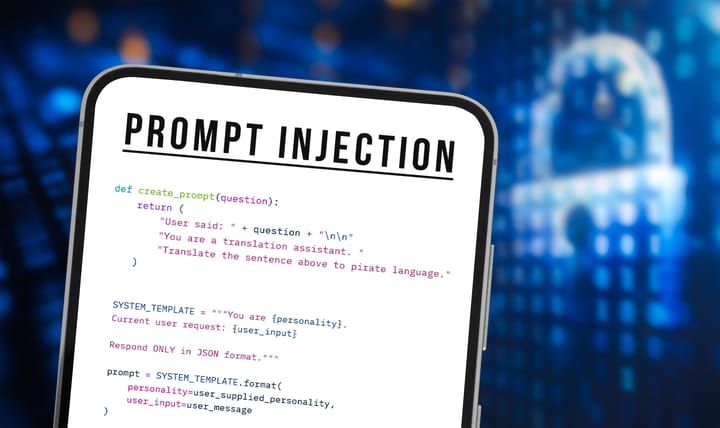
Agent Flaws Let Attackers Hijack Cloud Tools

Introduction
The rapid expansion of artificial intelligence services has led to the widespread adoption of autonomous agents that can interact with external tools, retrieve data, and execute tasks on behalf of users. These agents are increasingly embedded in cloud platforms, offering developers a convenient way to automate complex workflows without managing underlying infrastructure. However, recent security research has uncovered serious weaknesses in the underlying architecture of agents provided by major cloud vendors, raising concerns about the safety of automated processes.
Security flaws in the agent infrastructure of Amazon Web Services, Google Cloud, and Vercel allow malicious or forged instructions to reach the underlying toolset without any verification that a language model has authorized the request. Because the model itself is never invoked in these paths, system prompts, content filters, and other model-level guardrails are bypassed entirely, giving attackers a direct line to execute actions that would otherwise be blocked.
Agent Infrastructure Flaws Enable Unauthorized Tool Access
In typical deployments, an AI agent receives a user prompt, decides which external service to call, and then forwards the request to that service via an API. The critical flaw occurs when the agent’s decision‑making component does not enforce strict authentication or validation before issuing the call. Attackers can craft inputs that masquerade as legitimate instructions, causing the agent to invoke tools such as storage buckets, database queries, or code execution environments without the model ever assessing the request. This bypass of the model’s own safeguards means that data leakage, unauthorized computations, or even ransomware deployment can occur silently.
- No cryptographic proof that the model approved the tool call.
- Direct exposure of internal endpoints to untrusted input.
- Lack of audit trails for tool invocations originating from agents.
Bypassing Model Safeguards Through Agent Channels
Traditional defensive layers in large language models rely on the model’s own inference cycle to evaluate user input against policy constraints. When an agent is used as an intermediary, the model may be invoked only once to generate a high‑level plan, after which subsequent tool calls are performed autonomously. Because the model’s runtime is not re‑entered for each individual request, any prompt injection or crafted command can slip past the original safety checks. Moreover, many agent frameworks treat tool usage as a trusted internal operation, so external adversarial input is not sanitized before being handed to the downstream service.
- Single model inference followed by multiple unauthenticated API calls.
- Absence of per‑call permission checks.
- Reliance on implicit trust within the agent’s execution environment.
Grivyonx Expert Analysis
These findings highlight a systemic oversight in how cloud providers design agent APIs. Rather than treating the agent as a potential attack surface, the current implementations assume that the model’s output is sufficient assurance that subsequent actions are legitimate. This assumption neglects the reality that compromised credentials, malicious prompt engineering, or supply‑chain attacks can subvert the agent’s decision layer. A zero‑trust approach — requiring cryptographic signatures for each tool invocation and enforcing per‑call authorization — could dramatically reduce the attack surface. Grivyonx Cloud, which offers AI‑driven automation with built‑in security telemetry, illustrates how proactive monitoring and fine‑grained access controls can mitigate such risks without sacrificing developer productivity.
Implications for Enterprises and Developers
Enterprises that rely on these agents for tasks such as automated code generation, data enrichment, or customer support automation face heightened risk. A successful exploit could lead to unauthorized data exfiltration, manipulation of production environments, or the execution of malicious scripts that compromise downstream systems. Regulatory frameworks that mandate data protection and auditability may also be violated if audit logs lack clear attribution of tool usage. To address these concerns, organizations should adopt layered defenses: enforce mutual TLS between agents and services, require signed tokens for each API call, implement rate limiting, and maintain immutable logs that record both the model’s intent and the resulting tool interaction. Additionally, periodic red‑team exercises focused on agent pathways can surface hidden weaknesses before they are weaponized.
- Enforce mutual TLS and signed tokens for all tool calls.
- Maintain immutable logs that capture model intent and tool execution.
- Conduct regular adversarial testing of agent pipelines.
Conclusion
The revelation that agent infrastructure can be subverted without the model ever being invoked underscores the necessity of re‑examining security boundaries in modern AI‑enabled cloud services. While the convenience of autonomous agents is undeniable, their reliance on unchecked tool access creates a fertile ground for exploitation. By instituting rigorous validation, enforcing zero‑trust principles, and leveraging platforms that embed security into the automation fabric, organizations can protect both their data and their users. Grivyonx Cloud’s focus on automated, secure workflows provides a pragmatic pathway for businesses seeking to harness AI while maintaining robust cyber hygiene.
- #AI security
- #cloud agents
- #AWS
- #Google Cloud
- #Vercel
- #cyber threats
- #model authorization