Cold Relic Leverages Stolen Google Workspace Data for Second U.S.

Introduction
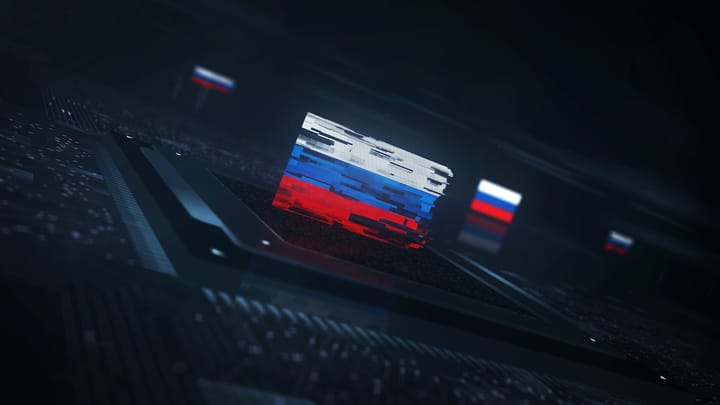
Google’s Mandiant and Threat Intelligence Group (GTIG) have disclosed that the Russia‑linked espionage collective known as Cold Relic — previously tracked as COLDRIVER and UNC4057 — transformed a single Google Workspace compromise into a foothold for a follow‑on intrusion against another United States entity. The finding underscores how a lone cloud identity breach can cascade into a broader campaign when attackers reuse harvested credentials and session tokens.
Background on Cold Relic
Cold Relic has been active for several years, focusing on credential harvesting, spear‑phishing, and the exploitation of cloud‑based collaboration platforms. The group’s rebranding from COLDRIVER to Cold Relic reflects an evolution in tooling and operational security, but its core objective — strategic intelligence collection against government, defense, and technology targets — remains unchanged. Public reporting links the actor to multiple high‑profile credential‑theft operations, often beginning with compromised email accounts.
The Cloud Compromise Chain
According to the joint Mandiant‑GTIG investigation, the initial compromise occurred in 2026 at a U.S.-based organization that used Google Workspace for email, document sharing, and identity management. Attackers obtained access to Workspace data — likely including mailboxes, drive files, and directory information — and then leveraged that foothold to breach a second, unrelated U.S. organization. The exact techniques used in the second intrusion have not been publicly disclosed, but the pattern suggests credential reuse, token replay, or abuse of federated trust relationships between the two environments.
Implications for Defenders
This incident illustrates three critical risk vectors for any organization relying on cloud productivity suites:
- Identity as the new perimeter: A single compromised Workspace account can grant attackers visibility into internal communications, shared documents, and directory structures, enabling reconnaissance for subsequent targets.
- Trust transitivity: Federated or delegated access between partner organizations can turn a breach in one tenant into a bridge into another.
- Persistence via cloud tokens: OAuth refresh tokens and session cookies often survive password resets, giving adversaries long‑term access unless explicitly revoked.
Security teams should treat any Workspace compromise as a potential launchpad for lateral movement across business relationships, not merely an isolated email breach.
Practical Mitigation Steps
Organizations can reduce the likelihood and impact of similar chains by implementing the following controls:
- Enforce phishing‑resistant multi‑factor authentication (FIDO2/WebAuthn) for all Workspace accounts, including service accounts.
- Enable Google’s Advanced Protection Program for high‑value users and monitor for anomalous token issuance.
- Regularly audit third‑party OAuth grants and revoke any that are unnecessary or outdated.
- Deploy continuous monitoring for impossible travel, unusual API call volumes, and sudden changes in delegation settings.
- Establish an incident‑response playbook that includes immediate revocation of all sessions and tokens for compromised accounts, plus notification of any federated partners.
Grivyonx Expert Analysis
The Cold Relic case demonstrates that cloud identity hygiene is now a strategic imperative. Automated detection of token abuse, combined with zero‑trust segmentation of Workspace tenants, can break the chain before a second organization is impacted. Grivyonx’s AI‑driven DevSecOps platform integrates continuous identity‑risk scoring with automated remediation, helping teams close the window between compromise and containment.
Conclusion
The Cold Relic campaign serves as a stark reminder that a single cloud credential breach can ripple across organizational boundaries, turning a modest incident into a multi‑victim espionage operation. By hardening Workspace identity controls, monitoring token lifecycles, and preparing coordinated response procedures with partners, defenders can disrupt the attacker’s reuse strategy. Grivyonx’s cloud security and automation services are designed to provide the visibility and rapid response capabilities needed to stop such chains early.
- #Cold Relic
- #Google Workspace
- #cloud security
- #espionage
- #incident response
- #Mandiant
- #GTIG