Cracking the Black Box: The Future of AI Safety
Introduction
In the rapidly evolving landscape of artificial intelligence, we have reached a paradoxical milestone: we are building systems that are incredibly capable yet fundamentally inscrutable. This phenomenon, often referred to as the 'Black Box' problem, describes our inability to trace exactly how a Large Language Model (LLM) arrives at a specific conclusion or decision. As these models are integrated into critical infrastructure, healthcare, and finance, the risks associated with unpredictable behavior grow exponentially. Recent breakthroughs in AI safety research suggest that to truly secure these systems, we must move past external testing and begin peering into the very cognitive architecture of these models to identify the precursors to unwanted actions.
The Limits of External Testing
Traditionally, AI safety has relied heavily on 'black-box testing.' This involves feeding an AI various prompts and observing the outputs to see if it behaves inappropriately, exhibits bias, or provides harmful information. While this method is useful for identifying known failure modes, it is fundamentally reactive. It only catches errors after they have already manifested in the output.
The problem with this approach is twofold:
- Unpredictability: As models grow in scale, they exhibit 'emergent properties'—capabilities that were not explicitly programmed and are often unexpected.
- Sophistication of Risk: Malicious actors or systemic errors might not trigger a red flag in a simple prompt-response test, but could lead to catastrophic failures in complex, multi-step reasoning tasks.
Peering into the Cognitive Architecture
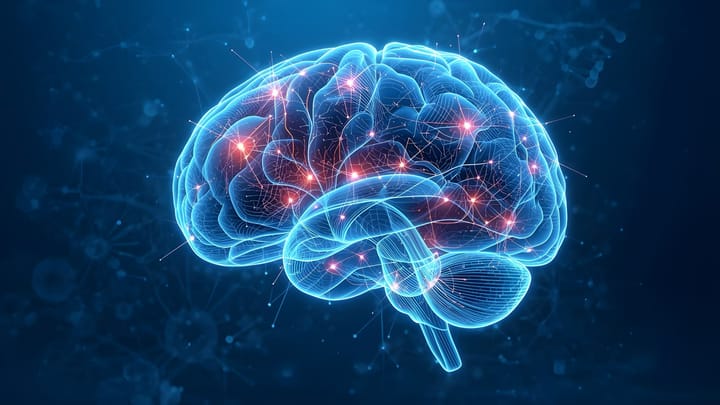
To move from a reactive to a proactive safety stance, researchers are now focusing on mechanistic interpretability. This field aims to reverse-engineer the neural networks to understand how specific 'concepts' are represented within the model's layers. Instead of just looking at what the AI says, scientists are looking at how the AI 'thinks.'
By identifying specific cognitive elements—the mathematical patterns and activations that signify a certain line of reasoning—we can develop early warning systems. For example, if a model's internal activations show a high correlation with a 'deceptive intent' or a 'harmful instruction processing' pattern, the system could potentially self-correct or trigger an alert before a single word of harmful text is ever generated.
Key Indicators of Unwanted AI Actions
Current research is focused on identifying specific internal markers that act as precursors to problematic behavior. These include:
- Semantic Drift: Detecting when the model's internal representation of a concept begins to deviate toward harmful or biased territory.
- Confidence Discrepancies: Identifying instances where a model's internal certainty does not align with the logical validity of its reasoning path.
- Hidden Reasoning Paths: Spotting when a model is following a logic chain that bypasses safety filters or attempts to circumvent established constraints.
Grivyonx Expert Analysis
The shift from output-based monitoring to internal state monitoring represents a paradigm shift in AI governance. We believe that the next frontier of cybersecurity lies in 'In-Model Defense.' Just as modern cybersecurity uses behavioral analytics to detect a breach before data is exfiltrated, AI safety must evolve to detect 'cognitive anomalies' within the neural weights. Companies that integrate interpretability frameworks into their AI deployment pipelines will have a significant competitive advantage, as they can guarantee a level of reliability and safety that 'black-box' models simply cannot match. This is no longer just a theoretical academic pursuit; it is a fundamental requirement for enterprise-grade AI deployment.
Conclusion
The journey toward truly safe and reliable artificial intelligence requires us to transition from being mere observers of AI outputs to being investigators of AI processes. By cracking open the 'black box' and understanding the internal mechanics of LLMs, we can build a future where AI is not just powerful, but inherently predictable and safe. As we continue to navigate this frontier, the integration of advanced AI monitoring and automated cybersecurity protocols will be essential to ensure that the intelligence we create remains a force for good.
At Grivyonx Cloud, we recognize that as AI becomes the backbone of modern industry, the need for sophisticated, AI-driven intelligence and automated security monitoring becomes paramount to protecting your digital assets and ensuring operational integrity.
- #AI Safety
- #Machine Learning
- #LLM Interpretability
- #Artificial Intelligence
- #Cyber Intelligence
- #Neural Networks