CUSTODY Framework Keeps AI Agents Inside Enterprise Networks
Introduction
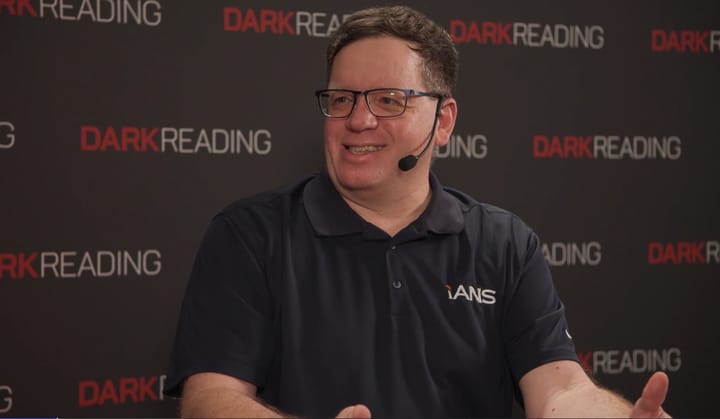
As generative AI tools become embedded in everyday workflows, security teams face a new challenge: how to let these agents assist without letting them roam freely across the network. Jake Williams, a seasoned cybersecurity practitioner, recently introduced the CUSTODY framework to address exactly that tension. Speaking on the Dark Reading News Desk, Williams explained that the framework emerged after observing how the OpenAI‑linked incidents on Hugging Face exposed gaps in current containment strategies. The following sections break down what CUSTODY is, why it matters now, and how it works under the hood.
Understanding the CUSTODY Framework
CUSTODY stands for "Controlled Utilization and Segregation of Tactical Orchestrated Dynamic Yield." At its core, the framework treats every AI agent as a privileged workload that must be confined to a defined network segment unless explicit policy grants broader access. Rather than attempting to block AI outright—a tactic that often hampers innovation—CUSTODY enforces least‑privilege principles through a combination of network micro‑segmentation, real‑time behavior analytics, and automated policy enforcement.
The approach mirrors zero‑trust concepts but adds a layer specific to the autonomous nature of agentic AI. By treating each agent’s actions as a series of API calls or system interactions, CUSTODY can detect anomalous patterns—such as an agent attempting to reach external data stores or lateral movement beyond its assigned zone—and trigger immediate containment measures.
Why the OpenAI‑Hugging Face Incident Prompted Action
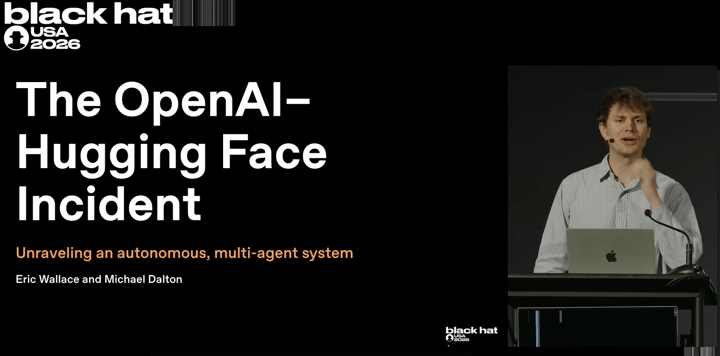
In early 2024, a series of prompts leveraging OpenAI models were used to manipulate Hugging Face’s model repository, leading to unauthorized model downloads and potential supply‑chain contamination. While the attack did not result in widespread damage, it demonstrated how easily a well‑crafted AI agent could be co‑opted to bypass traditional security controls.
Williams noted that the incident acted as a catalyst: it showed that existing safeguards—such as API rate limits or basic authentication—were insufficient when the attacker’s tool was itself an AI capable of adapting its tactics in real time. The CUSTODY framework was conceived to close that gap by focusing on the agent’s behavior rather than just its origin or credentials.
Key Technical Mechanisms Behind CUSTODY
- Network Micro‑Segmentation: Each AI agent is assigned to a isolated VLAN or software‑defined perimeter. Communication outside this segment requires explicit approval from a policy engine.
- Runtime Behavior Monitoring: Lightweight agents collect telemetry on system calls, file accesses, and outbound connections. Machine‑learning models baseline normal activity and flag deviations.
- Policy‑Driven Throttling: If an agent exhibits signs of credential harvesting or data exfiltration, the framework can automatically throttle its bandwidth or quarantine the workload.
- Dynamic Policy Updates: Security teams can adjust constraints via a central console, allowing rapid response to emerging threats without redeploying agents.
- Audit and Forensics Logging: All actions are immutably logged, facilitating post‑incident analysis and compliance reporting.
Grivyonx Expert Analysis
From Grivyonx’s perspective, the real innovation of CUSTODY lies in its shift from perimeter‑centric defenses to workload‑centric controls. Traditional firewalls and intrusion‑detection systems assume a static trust boundary, which agentic AI continuously reshapes by initiating connections based on learned objectives. By embedding policy enforcement directly into the workload’s communication path, CUSTODY aligns security with the operational elasticity that modern AI demands. This approach also dovetails well with Grivyonx’s own AI‑driven threat‑intelligence pipelines, which can feed real‑time risk scores into the CUSTODY policy engine to adjust constraints on the fly.
Conclusion
The CUSTODY framework offers a pragmatic path forward for enterprises eager to harness agentic AI without sacrificing security posture. By treating AI agents as regulated workloads and enforcing strict network boundaries, organizations can reap the benefits of automation while limiting the blast radius of any malicious or errant behavior. As AI continues to evolve, solutions like CUSTODY will become essential components of a resilient, adaptive defense strategy—especially when paired with platforms such as Grivyonx Cloud that provide continuous AI‑powered monitoring and automated response capabilities.
- #AI security
- #agentic AI
- #cybersecurity
- #CUSTODY framework
- #Jake Williams
- #Hugging Face
- #OpenAI
- #enterprise defense