Why Cyber Deception Is Essential for OT Security
Introduction
Operational technology environments power the backbone of modern civilization — from power plants and water treatment facilities to oil refineries and manufacturing floors. These systems run 24/7 with little room for downtime, making them both invaluable and incredibly vulnerable. When a cyberattack breaches an OT network, the consequences extend far beyond data loss: they threaten public safety, economic stability, and national security.
Here lies the deeply frustrating reality that security teams in this space have come to dread: after an OT cyberattack, investigators often find themselves standing in a barren digital landscape — no data to analyze, no attack trail to follow, and no historical records to reference. Unlike traditional IT environments overflowing with logs, alerts, and forensic artifacts, OT networks have historically been silent witnesses to their own compromise. This is precisely why cyber deception has emerged as an indispensable layer of defense for operational technology.
The Unique Challenge of Securing Operational Technology
Operational technology and information technology were built for fundamentally different purposes. IT systems prioritize data confidentiality, integrity, and availability — with logging, monitoring, and rapid patching baked into their design. OT systems, on the other hand, were engineered for availability and reliability first, often running legacy protocols and unsupported software that were never designed with cybersecurity in mind.
This creates a perfect storm of vulnerabilities:
- Legacy protocols: Many OT protocols such as Modbus, DNP3, and PROFINET were designed decades ago with zero authentication or encryption built in.
- Extended lifecycles: Industrial equipment often operates for 15 to 30 years, far outliving the security support windows of their embedded software.
- Air-gap misconceptions: The belief that isolation from the internet provided sufficient protection has been thoroughly dismantled by targeted attacks like Stuxnet and Industroyer.
- Consequences of disruption: Unlike a compromised email server, a disrupted OT environment can cause physical damage, environmental hazards, and loss of life.
The convergence of IT and OT networks has further blurred the boundaries, giving attackers a bridge from the digital world into the physical one. Every connection point represents a potential entryway for adversaries who understand that OT environments are often easier to exploit and far more devastating to disrupt.
No Data, No Trail, No History: The Forensic Blackout
The most alarming aspect of OT cyberattacks is what happens after the breach — or more accurately, what doesn't happen. In a typical IT breach, security operations centers are flooded with alerts, endpoint detection tools generate forensic artifacts, and log files accumulate evidence that investigators can piece together. In OT environments, this forensic pipeline simply does not exist.
When an attacker manipulates a programmable logic controller or alters process values in a distributed control system, the changes often leave no trace in conventional monitoring tools. The PLC doesn't log who changed the setpoint. The historian database might not record the manipulation if the attacker has compromised the data collection layer. By the time operators notice something wrong — through abnormal readings, equipment failure, or an audible alarm on the plant floor — the damage is already done and the digital evidence has been erased or was never created in the first place.
This forensic blackout creates three devastating consequences for organizations:
- Incident response becomes guesswork: Without a clear timeline or attack path, response teams are forced to make decisions based on incomplete information.
- Root cause analysis stalls: Understanding how the breach occurred is nearly impossible without artifacts to examine, leaving organizations vulnerable to repeat attacks.
- Regulatory and insurance complications: Compliance frameworks increasingly require documented incident timelines, and the absence of evidence can result in penalties or denied claims.
How Cyber Deception Transforms OT Defense
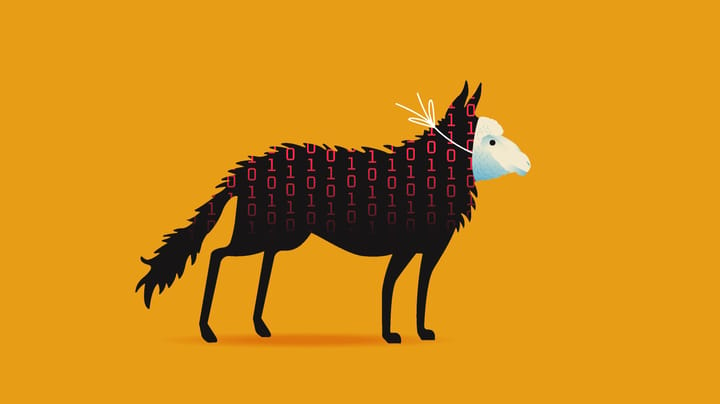
Cyber deception technology addresses the OT security gap by creating a fabric of decoys, honeypots, and breadcrumbs woven throughout the operational environment. These decoys mimic real OT assets — PLCs, HMIs, engineering workstations, and historians — and are designed to attract, distract, and expose attackers who have already penetrated the network.
The power of deception in OT environments cannot be overstated for several reasons:
- Early detection of lateral movement: Since legitimate users and processes should never interact with decoy assets, any engagement with a honeypot immediately signals malicious activity.
- Forensic visibility where none existed: Every interaction with a deception asset generates rich, high-fidelity alerts with full session recordings, giving investigators the timeline and attack details they desperately need.
- Disruption of attack workflows: Deception can waste an attacker's time, corrupt their tools, and feed them false information, degrading their ability to execute the final phase of their operation.
- Low false-positive rates: Because legitimate traffic should never touch decoys, alerts from deception technology carry extraordinary confidence levels, reducing alert fatigue for overburdened security teams.
When deployed strategically across an OT network — between zones and conduits, alongside critical asset classes, and within data historian environments — deception creates a web of tripwires that ensures attackers cannot move silently. The technology effectively creates the data, the trail, and the history that OT environments have always lacked.
Practical Implementation Considerations for OT Deception
Deploying deception technology in operational technology requires careful planning and a deep understanding of the industrial environment. Unlike IT deception, which can be deployed relatively quickly, OT deception must account for real-time processes, safety systems, and the physical consequences of any network interaction.
Key considerations include:
- Protocol fidelity: Decoys must accurately emulate the specific OT protocols used in the environment, including proprietary extensions and timing behaviors.
- Passive deployment: Deception assets should be deployed in a manner that does not introduce latency or interference into live process control.
- Strategic placement: Decoys should be positioned at logical attack progression points — between IT and OT boundaries, within engineering workstations, and near critical control systems.
- Integration with existing tools: Deception alerts must flow seamlessly into SIEM, SOAR, and incident response workflows already in place.
- Continuous updating: As the OT environment evolves with new equipment and protocols, the deception layer must adapt to remain credible and effective.
Organizations that have successfully implemented OT deception report not only faster detection times but also a fundamental shift in their security posture — from reactive scrambling after an incident to proactive hunting and containment before damage occurs.
Grivyonx Expert Analysis
The gap between IT and OT security maturity remains one of the most critical challenges facing critical infrastructure today. While the enterprise security world has benefited from decades of investment in detection tools, threat intelligence platforms, and automated response systems, OT environments have been largely left behind — not due to neglect, but because of the unique engineering constraints that make traditional security tools impractical or even dangerous to deploy. Cyber deception represents a rare paradigm shift: a technology that works because of the OT environment's characteristics rather than in spite of them. The fact that legitimate OT traffic never touches decoy assets means that deployment in live production environments carries virtually zero risk of interference — a stark contrast to agents, scanners, or monitoring tools that can introduce latency or instability. At Grivyonx Cloud, we view deception not as a standalone product but as a foundational layer within a unified cyber intelligence strategy. Our AI-driven approach extends deception technology into the broader context of threat detection, automated analysis, and rapid response, ensuring that when an attacker steps onto a decoy PLC in your OT environment, the entire security infrastructure knows within seconds — and responds with precision. The era of silent breaches in industrial control systems must end, and deception technology is the catalyst that makes that possible.
Conclusion
The reality is clear: operational technology environments cannot continue to rely on the assumption that attackers will leave enough evidence to investigate after a breach. The absence of logs, trails, and historical data is not a minor inconvenience — it is a fundamental architectural weakness that leaves organizations blind when they need visibility most. Cyber deception fills this void by creating artificial but highly realistic surfaces that guarantee detection the moment an intruder begins to explore.
For organizations responsible for critical infrastructure, manufacturing operations, or energy delivery, integrating deception technology into the OT security stack is no longer optional — it is essential. Combined with continuous monitoring, threat intelligence, and automated incident response, deception creates a defense-in-depth strategy that finally gives security teams the tools they need to see, understand, and stop attacks before they reach critical control systems. At Grivyonx Cloud, we specialize in building AI-powered cyber intelligence platforms that unify deception, detection, and automation into a cohesive defense ecosystem tailored for the unique demands of operational technology. To explore how our solutions can transform your OT security posture, visit grivyonx.com and discover the future of industrial cybersecurity.
- #OT cybersecurity
- #cyber deception
- #operational technology
- #critical infrastructure security
- #industrial control systems
- #ICS security
- #threat detection