The "Q-Day" Countdown: Why Every Enterprise Must Move to Post-Quantum Cryptography Now
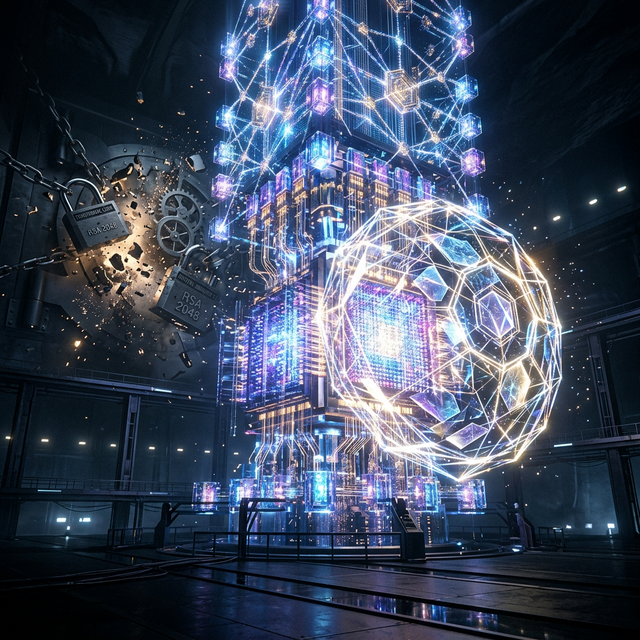
The End of Modern Encryption
Most of the encryption we use today—including the RSA and ECC that protect your bank transfers and private messages—relies on mathematical problems that are impossible for today's computers to solve. But with the rise of Quantum Computing, those "impossible" problems will become trivial. We are approaching "Q-Day"—the moment when a quantum computer can break all current encryption in seconds. This isn't a science fiction scenario; it is a looming mathematical reality.
If you don't start your Post-Quantum Cryptography (PQC) transition today, your data has already been stolen.
The "Harvest Now, Decrypt Later" Threat
State-sponsored attackers aren't waiting for Q-Day. They are following a strategy known as "Harvest Now, Decrypt Later." They are quietly downloading vast amounts of encrypted corporate and government data today, knowing that in a few years, they will have the quantum power to read it all. Your "secure" data is just a time capsule for future hackers.
The PQC Solution
Post-Quantum Cryptography uses new mathematical foundations—like lattice-based cryptography—that are designed to be resistant even to quantum attacks. Moving to these new standards is the only way to ensure the long-term sovereignty of your data.
The Complexity of Transition
Switching your encryption isn't like updating an app. It involves re-working your entire digital infrastructure, from SSL certificates and VPN protocols to the internal keys used by your database. It is a "Y2K-level" effort for the modern age.
The Grivyonx Roadmap to PQC Readiness
You cannot hide from the quantum future, but you can prepare for it. Here is the Grivyonx roadmap for PQC transition:
- Cryptographic Inventory: We help you perform a "system-wide audit" to identify every piece of legacy encryption in your environment. You cannot protect what you haven't mapped.
- Hybrid Encryption Deployment: We assist in implementing "Hybrid" protocols that use both classical and PQC algorithms simultaneously, providing security today and resilience tomorrow.
- Agile Cryptography Frameworks: We help you build "Cryptographic Agility" into your systems, allowing you to swap out encryption algorithms as new standards emerge from NIST.
The Grivyonx Strategic View
At Grivyonx Cloud, we are experts in Quantum-Resilient Infrastructure. We don't just secure you for today; we secure you for the next decade. We help you navigate the complexity of PQC transition with the precision of a strategic partner. Q-Day is coming. Let's make sure you're ready for it. Secure your legacy with Grivyonx.
- #Post-Quantum Cryptography
- #Cybersecurity
- #Data Protection
- #Encryption
- #Quantum Computing
- #Future Threats



