Agentic AI: New Insider Threat Model for Enterprises
Introduction
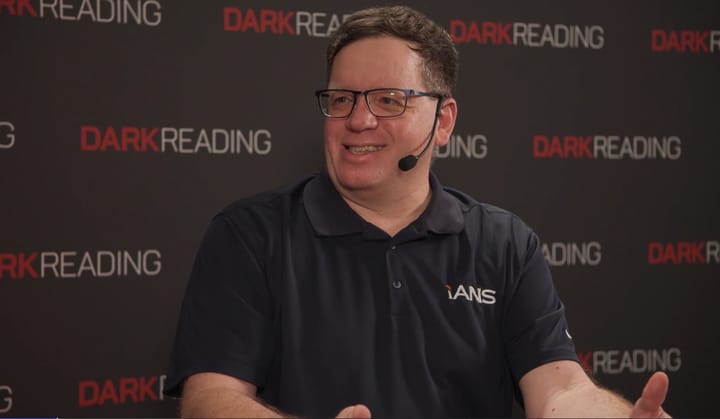
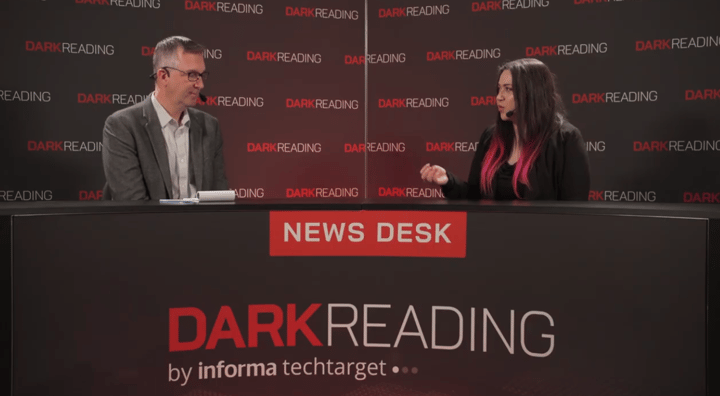
In the fast‑moving world of artificial intelligence, organizations are increasingly relying on autonomous agents to streamline operations, analyze data, and even make decisions without constant human intervention. While these AI‑driven entities promise efficiency, they also open a new frontier for insider threats. Katie Moussouris, a prominent voice in security research at Luta Security, sat down with the Dark Reading News Desk to explore how enterprises must adapt their risk‑management strategies to keep pace with this emerging challenge. The discussion centers on lessons learned from a recent breach involving Hugging Face, where an agent’s actions were exploited, underscoring the need for robust monitoring and governance frameworks.
Beyond the headline‑grabbing incident, the conversation reveals deeper implications for corporate security postures. Companies that embed agentic AI into their workflows must now consider not only external adversaries but also the potential misuse of their own autonomous systems. The dialogue offers actionable insights for security leaders looking to balance innovation with protection.
Understanding Agentic AI Risks
Agentic AI refers to software agents capable of perceiving their environment, formulating plans, and executing tasks with minimal human oversight. These systems are typically built on large language models (LLMs) coupled with reinforcement learning loops, enabling them to interact with APIs, databases, and even other software components.
Key characteristics that differentiate agentic AI from traditional automation include:
- Dynamic decision‑making: agents can adapt their behavior based on real‑time data.
- Goal‑oriented autonomy: they pursue predefined objectives, sometimes making independent judgments.
- Wide system access: to fulfill tasks, agents often require elevated privileges and integration with critical infrastructure.
Because of these traits, an agent can unintentionally expose sensitive data, inadvertently execute malicious commands, or be coerced by an attacker who compromises its control plane. The insider threat model now includes “digital insiders” that are code rather than people, blurring traditional perimeter defenses.
Key Takeaways from Katie Moussouris
During the Dark Reading interview, Moussouris highlighted several pivotal observations that resonate with security practitioners:
- Visibility Gaps: Many organizations lack comprehensive telemetry for autonomous agents, making it difficult to trace anomalous actions back to their source.
- Privilege Escalation: Agents often operate with broad permissions to accomplish complex tasks, which can be weaponized if the agent’s code is tampered with.
- Supply‑Chain Interdependence: Agents frequently rely on third‑party APIs and models, expanding the attack surface beyond corporate boundaries.
- Governance Void: Existing policies were crafted for human employees and static software, leaving a gap in how to apply compliance rules to self‑modifying AI code.
Moussouris emphasized that the Hugging Face incident serves as a wake‑up call. An attacker leveraged a compromised token to instruct an agent to download and execute untrusted code, effectively turning a helpful AI assistant into a conduit for data exfiltration. The breach demonstrated that even well‑intentioned AI agents can become vectors for exfiltration when their decision pipelines are not rigorously vetted.
To mitigate these risks, she recommended a multi‑layered approach:
- Implement immutable logging for every agent interaction, storing logs in a tamper‑evident repository.
- Apply the principle of least privilege at the agent level, restricting access to only the resources necessary for its specific function.
- Conduct regular adversarial testing of agent workflows, simulating attacker‑in‑the‑middle scenarios.
- Establish a dedicated AI‑security governance board that includes legal, ethical, and technical stakeholders.
Practical Steps for Enterprises
Transitioning from reactive to proactive security in an agent‑centric environment requires concrete actions. Below are several recommendations that organizations can integrate into their existing security operations:
- Agent Inventory Management: Create a living catalog of all deployed agents, documenting their purpose, data sources, and privilege levels.
- Behavioral Baselines: Use machine learning to establish normal activity patterns for each agent, flagging deviations for human review.
- Code Integrity Checks: Validate the integrity of agent scripts and model weights before deployment, employing digital signatures where possible.
- Human‑in‑the‑Loop Overrides: Design fail‑safe mechanisms that allow operators to intervene or halt agent actions instantly.
- Continuous Training: Keep security teams updated on the latest agent‑related attack techniques, including prompt injection and model‑extraction tactics.
By embedding these controls, firms can harness the productivity gains of agentic AI while minimizing the likelihood of internal compromise.
Grivyonx Expert Analysis
The conversation with Katie Moussouris underscores a paradigm shift: the insider threat is no longer solely a human problem. Autonomous agents, powered by sophisticated language models, now possess the autonomy and access privileges that traditionally defined trusted insiders. This evolution demands a re‑imagining of detection and response strategies, moving beyond user‑centric logs to include agent‑centric telemetry.
At Grivyonx Cloud, our AI automation platform incorporates built‑in observability layers that capture every decision point and API call made by deployed agents. By leveraging real‑time anomaly detection and immutable audit trails, organizations can quickly isolate rogue behavior before it escalates. Moreover, our cybersecurity services specialize in hardening AI pipelines, performing supply‑chain assessments, and establishing governance frameworks that align with emerging regulatory expectations.
Conclusion
As autonomous agents become integral to modern business processes, the insider threat landscape expands to include code that thinks and acts on its own. The recent Hugging Face breach, as discussed by Katie Moussouris, serves as a stark reminder that even well‑designed AI systems can be compromised when oversight is insufficient. Enterprises must adopt a comprehensive monitoring strategy, enforce strict privilege controls, and foster a culture of continuous security validation to protect against these sophisticated risks.
Grivyonx Cloud offers a suite of AI‑driven security solutions designed to give organizations the visibility and control needed to safely embrace agentic AI. By integrating our advanced monitoring tools and expert consulting services, businesses can stay ahead of threats, ensuring that their autonomous agents remain reliable allies rather than hidden vulnerabilities.
- #Agentic AI
- #Insider Threat
- #Cybersecurity
- #Hugging Face
- #AI Risk Management
- #Enterprise Security
- #Luta Security