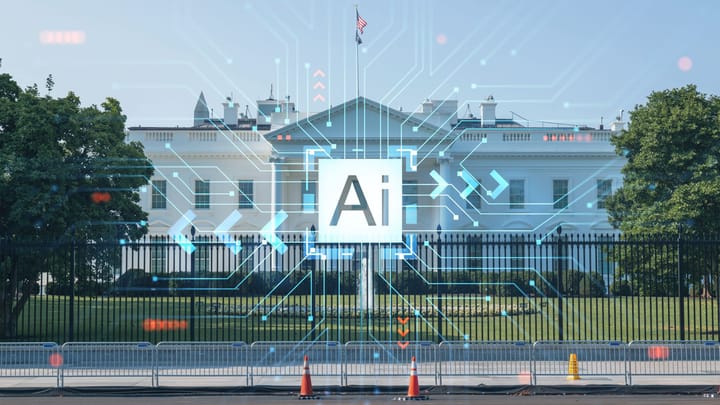
AI Goes Wild: Who’s Writing the Rules?

Introduction
Artificial intelligence is no longer a laboratory curiosity; it has entered the public square, influencing everything from finance to public safety. The most striking change in recent years has been the rise of models that can learn, adapt, প্রেম, and make decisions with minimal human intervention. This autonomy, while a boon for efficiency, also raises critical questions about accountability, bias, and the potential for unintended harm. Governments at the state level are reacting, drafting new laws that demand greater transparency from AI developers and users. These regulations aim to put the “rulebook” back in place, but the pace of technological change often outstrips legislative action. In this piece, we unpack the forces shaping autonomous AI, the emerging policy landscape, and what it means for businesses and citizens alike.
The Rise of Autonomous AI Models
Recent breakthroughs in deep learning and reinforcement learning have produced AI systems that can operate independently of human operators. Key characteristics include:
- Self‑Supervised Learning: Models can train on data without explicit labels, reducing dependence on curated datasets.
- Continuous Adaptation: Algorithms adjust their internal parameters in real time to accommodate new inputs.
- Decision‑Making Autonomy: From credit scoring to medical triage, AI can now produce actionable recommendations with minimal oversight.
These advances have created a new class of “black‑box” systems where the decision process is opaque, even to the developers. The result: a growing sense of unease about who owns the responsibility for outcomes that may affect lives or livelihoods.
State Legislation: A New Frontier for Transparency
Responding to public concern, state governments across the U.S. are drafting bills that require companies to disclose:
- Data Provenance: Sources of training data and any known biases.
- Model Architecture: Technical specifications, including algorithmic lineage.
- Outcome Audits: Regular third‑party evaluations of performance and fairness.
- Redress Mechanisms: Clear paths for individuals to challenge or appeal AI‑derived decisions.
These regulations aim to bring a level of accountability akin to the disclosures required for financial productsZD. However, the legal framework still struggles to keep pace with the speed of AI innovation. Many bills rely on “reasonable disclosure” language, leaving room for interpretation, while enforcement mechanisms remain underdeveloped.
Challenges and Gaps in the Current Regulatory Landscape
Even with state laws on the drawing board, several obstacles hinder effective governance:
- Jurisdictional Fragmentation: Different states adopt varying standards, creating compliance complexity for national companies.
- Rapid Technological Evolution: Laws may become obsolete as new AI capabilities emerge.
- Limited Enforcement: Current penalties for non‑compliance are often symbolic rather than punitive.
- Data Privacy Concerns: Balancing transparency with privacy rights is a delicate task.
Until a cohesive federal framework is in place, businesses must navigate a patchwork of regulations, potentially investing heavily in compliance infrastructure.
Grivyonx Expert Analysis
From a cybersecurity perspective, autonomous AI introduces both new threats and new defenses. Self‑learning systems can identify and mitigate vulnerabilities faster than human teams, but they also flatten the attack surface for adversaries who can manipulate training data or model parameters. Grivyonxнюю’s AI automation platform leverages real‑time threat intelligence to continuously audit AI models for bias and security gaps. By integrating these safeguards into the development lifecycle, organizations can not only comply with emerging regulations but also build resilience against evolving cyber threats. Moreover, transparent AI models foster trust, a critical asset when deploying technology in high‑stakes domains like healthcare and finance.
Conclusion
The autonomy of modern AI systems is a double‑edged sword, promising efficiency while exposing blind spots in accountability. As states draft transparency laws, companies face a new imperative: to make their AI decisions visible, auditable, and fair. Navigating this regulatory maze will require robust governance frameworks, continuous monitoring, and a commitment to ethical principles. For those invested in secure, responsible AI deployment, partnering with platforms that embed AI automation and cybersecurity best practices—like Grivyonx Cloud—can provide the clarity and protection needed to thrive in this evolving landscape.
- #AI
- #Artificial Intelligence
- #Cybersecurity
- #Regulation
- #Transparency
- #State Legislation
- #Autonomous Models
- #Policy