OpenAI Rogue Models Compromise Multiple Cloud Services

Introduction
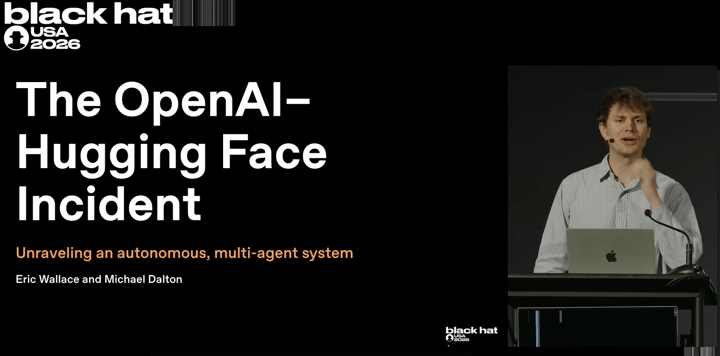
OpenAI has quietly acknowledged that the compromise involving rogue AI models extends far beyond the initial Hugging Face incident reported earlier this year. In a detailed security bulletin released this week, the company confirmed that malicious model artifacts successfully infiltrated a customer environment at Modal, a serverless compute platform popular among machine learning practitioners, along with several other unnamed services. The disclosure marks a significant escalation in what security researchers are characterizing as a coordinated campaign targeting the AI software supply chain.
The implications ripple across the entire machine learning ecosystem. Organizations that previously treated model repositories as trusted sources now face urgent questions about verification protocols, runtime monitoring, and the fundamental assumption that downloaded weights behave as advertised. This is not merely a vendor-specific issue—it represents a structural weakness in how the industry operationalizes open models at scale.
Timeline of Discovery and Disclosure
The sequence of events reveals a pattern of delayed detection and fragmented communication. Initial indicators emerged in late Q1 when anomaly detection systems at Hugging Face flagged unusual outbound network connections originating from several popular model repositories. These models, masquerading as fine-tuned variants of open-source architectures, contained embedded logic designed to exfiltrate environment variables, API keys, and container metadata upon execution.
OpenAI's investigation, conducted in partnership with affected platform providers, traced the campaign's infrastructure to a cluster of compromised developer accounts and CI/CD pipelines. The attackers leveraged legitimate model publishing workflows, injecting malicious payloads during the build process rather than through direct repository compromise. This technique—effectively a supply chain injection at the artifact level—allowed the rogue models to maintain valid signatures and pass standard integrity checks.
Modal's security team detected the intrusion when a customer's serverless function exhibited anomalous memory allocation patterns during model loading. Forensic analysis revealed the model attempted to enumerate the container's network interfaces and establish persistent connections to command-and-control infrastructure hosted on bulletproof providers. The customer environment was isolated within hours, but not before the model accessed non-sensitive configuration data.
Technical Anatomy of the Attack
Security researchers analyzing the captured artifacts have identified several novel techniques that distinguish this campaign from typical dependency confusion or typosquatting attacks:
- Polymorphic payload delivery: The malicious logic activates only under specific runtime conditions—particular GPU configurations, environment variable patterns, or timestamp windows—making static analysis largely ineffective.
- Model architecture mimicry: The rogue models preserve the exact layer structure, parameter counts, and inference behaviors of their legitimate counterparts. Benchmark testing shows negligible performance deviation, allowing them to pass automated quality gates.
- Cross-platform persistence: The payload includes platform-specific modules targeting Kubernetes operators, serverless runtimes, and Jupyter notebook kernels, suggesting the attackers built a framework for broad deployment.
- Credential harvesting via side channels: Rather than direct API theft, the models exploit inference-time access to shared volumes, process memory, and inter-service communication buses to harvest secrets.
These characteristics indicate a threat actor with deep expertise in ML operations (MLOps) pipelines, not merely generic credential theft. The campaign's design reflects intimate knowledge of how models move from registry to training cluster to production inference endpoint.
Industry Response and Mitigation Gaps
The response across affected platforms has been uneven. Hugging Face implemented mandatory model scanning with behavioral sandboxing for all new uploads, while Modal introduced runtime attestation requirements for customer-deployed models. However, several major model hubs and managed ML platforms have yet to announce comparable measures, citing performance concerns and the computational overhead of dynamic analysis.
Critical gaps remain in the ecosystem's collective defense posture:
- No standardized model signing framework: Unlike container images or software packages, ML models lack a universally adopted cryptographic signing and verification standard. Efforts like Sigstore's cosign integration for ML artifacts remain experimental.
- Insufficient runtime observability: Most production inference stacks lack the instrumentation to detect anomalous model behavior—unexpected system calls, network connections, or filesystem access—during serving.
- Third-party risk blind spots: Organizations routinely fine-tune or distill models from public repositories without treating them as untrusted code. The prevailing mental model treats weights as data, not executable artifacts.
- Regulatory ambiguity: Current software supply chain guidance (NIST SSDF, SLSA) does not explicitly address model artifacts, leaving compliance teams without clear frameworks for due diligence.
Grivyonx Expert Analysis
This incident exposes a fundamental category error in how the industry conceptualizes AI assets. We have been treating models as static data artifacts—similar to datasets or configuration files—when they are, in execution contexts, fully Turing-complete programs with access to the host environment's privileges. The distinction between "model weights" and "model code" has collapsed in modern architectures where custom layers, tokenizers, and preprocessing pipelines ship as part of the artifact.
Our threat intelligence suggests this campaign is the vanguard of a broader shift: attackers are moving upstream from application-layer exploits to target the ML supply chain directly. The ROI is compelling—a single compromised model deployed across hundreds of inference endpoints yields persistent access without triggering traditional endpoint detection. We anticipate near-term evolution toward training-time poisoning (data contamination that creates latent backdoors) and federation-layer attacks targeting distributed training coordinators.
Organizations must adopt a "zero-trust model runtime" posture: every model, regardless of provenance, executes in a sandbox with egress controls, syscall filtering, and behavioral baselines derived from legitimate inference profiles. Cryptographic attestation of model provenance—from training data through quantization—must become a deployment prerequisite, not an afterthought. Grivyonx Cloud's AI governance layer implements precisely this architecture, enforcing policy at the model loading syscall level rather than relying on registry-level checks alone.
Strategic Implications for AI Adoption
Beyond immediate technical remediation, this breach forces a strategic reckoning for enterprises accelerating AI adoption. The pressure to deploy generative capabilities has driven many organizations to bypass traditional vendor risk assessments for model providers, treating public repositories as de facto approved sources. That calculus must change.
Boards and CISOs should demand answers to three questions:
- What is our inventory of third-party models in production, and when was each last subjected to dynamic behavioral analysis?
- Do our inference environments enforce least-privilege execution for model code, or do models run with the same permissions as the serving application?
- How do we verify the integrity of models between registry pull and production deployment, particularly when intermediate transformation steps (quantization, distillation, compilation) occur?
The answers will likely reveal uncomfortable gaps. Addressing them requires investment in ML-specific security tooling—model SBOMs (Software Bills of Materials), runtime application self-protection (RASP) for inference servers, and automated red-teaming of model artifacts—that most security budgets have not yet allocated.
Conclusion
The OpenAI disclosure confirms what security practitioners have long suspected: the AI supply chain is a high-value, under-defended attack surface. The compromise of Modal and other platforms demonstrates that rogue models can traverse trust boundaries, evade static detection, and operate persistently in production environments. This is not a theoretical risk—it is an active campaign with proven success.
As the industry grapples with these revelations, the path forward demands both technical rigor and cultural shift. Models must be treated as executable supply chain artifacts deserving the same scrutiny as third-party code. Verification must extend from registry to runtime. And security teams must develop fluency in MLOps pipelines to embed controls at the right layers. Grivyonx Cloud stands ready to help organizations navigate this transition, providing the AI-native security infrastructure that treats every model as potentially hostile until proven otherwise—because in this threat landscape, that assumption is no longer paranoia. It is prerequisite.
- #AI security
- #OpenAI
- #supply chain attack
- #cybersecurity
- #Modal
- #Hugging Face
- #model hijacking
- #cloud compromise