ServicesBlogPricingContactContact Now

Grivyonx Intelligence Hub

Cloud News and Analysis - Page 5

Cloud, SaaS and infrastructure security incidents, misconfigurations and hardening guidance.

Cloud

Trusted Cyber Models: Daybreak Partners Unlock OpenAI Power

Daybreak’s newly approved partners gain access to OpenAI’s cutting‑edge frontier cyber models, enabling them to offer AI‑powered security services that are both highly effective and tightly governed. This partnership marks a significant step toward democratizing advanced AI tools while maintaining robust compliance and trust frameworks. By embedding these models into their workflows, partners can now provide faster threat detection, automated incident response, and proactive risk mitigation—all under strict governance policies that protect client data and meet regulatory standards.

By Gourav Rajput

Cloud

New macOS Malware Threat: ClickFix Attacks Steal Crypto and Sensitive Data

<p>The rise of ClickFix-style attacks has introduced a new wave of macOS-targeted malware designed to steal cryptocurrency and sensitive digital credentials. These threats leverage sophisticated infection chains to bypass security measures.</p><p>Developers of this malware use Go-based code to create platform-specific payloads, ensuring maximum compatibility with targeted systems. This adaptability makes it a growing concern for both individual and enterprise users.</p>

By Gourav Rajput

Cloud

Agent Flaws Let Attackers Hijack Cloud Tools

Recent research uncovered critical vulnerabilities in the agent infrastructure of major cloud providers, allowing attackers to send forged instructions directly to underlying tools without model approval. Because the model is never invoked in these paths, traditional safeguards such as system prompts and content filters are bypassed, exposing systems to unauthorized actions.

By Gourav Rajput

Cloud

Malicious npm Packages Exploit Alibaba Tools with Cross-Platform RAT

<p>Recent cybersecurity research has uncovered a dangerous trend: 18 malicious npm packages are being distributed to users of Alibaba developer tools. These packages secretly embed a cross-platform remote access trojan (RAT), enabling attackers to infiltrate systems undetected. The attack highlights the growing sophistication of supply chain threats targeting Chinese-speaking environments.</p><p>One of the most concerning packages is 'lib-mtop,' which mimics a legitimate Alibaba private package but operates as a Trojan horse. Researchers warn that this attack vector could compromise sensitive data and system control across multiple platforms.</p>

By Gourav Rajput

Cloud

How Malware Can Hijack Passkey-Protected Accounts via Google Password Manager

New research from Unit 42 reveals three distinct attack paths targeting Chrome's Google Password Manager that could allow malware to silently hijack passkey-protected accounts. The most severe chain, called Golden Pass-ta-key, compromises the master encryption key itself, bypassing all user-facing authentication prompts.

By Gourav Rajput

Cloud

Why Device Code Phishing Dominates 2026 Threat Landscapes

The OAuth 2.0 device authorization grant, originally designed for smart TVs and printers, has become the primary attack vector for credential theft in 2026. Attackers have industrialized this flow, bypassing MFA and stealing access tokens at scale. This shift represents a fundamental failure in identity perimeter security. Organizations relying on conditional access policies alone are finding their defenses invisible to this technique, as the authentication occurs on a separate, trusted device entirely outside the corporate network.

By Gourav Rajput

Cloud

Azure Cosmos DB Breach Risk: How a Gremlin Query Flaw Could Compromise Entire Tenants

<h2>Introduction</h2> A recently patched vulnerability in Azure Cosmos DB, named CosmosEscape, exposed a critical flaw that could have allowed attackers to bypass security restrictions. This breach could have granted unauthorized access to databases across multiple customer tenants. Security experts emphasize the urgency of addressing such flaws in cloud environments.<h2>Understanding the Gremlin Query Exploit</h2> The attack leveraged a specially crafted Gremlin query to escape the service's sandbox, a critical security measure designed to isolate database operations.

By Gourav Rajput

Cloud

Russian Hackers Exploit OWA Flaw to Maintain Access

In mid‑2026, Russian threat actors leveraged a patched Microsoft Outlook Web Access (OWA) flaw to keep persistent mailbox access even after credential rotation, targeting U.S. and European governments and critical sectors. The attack showcases advanced persistence tactics and highlights the need for layered security measures.

By Gourav Rajput

Cloud

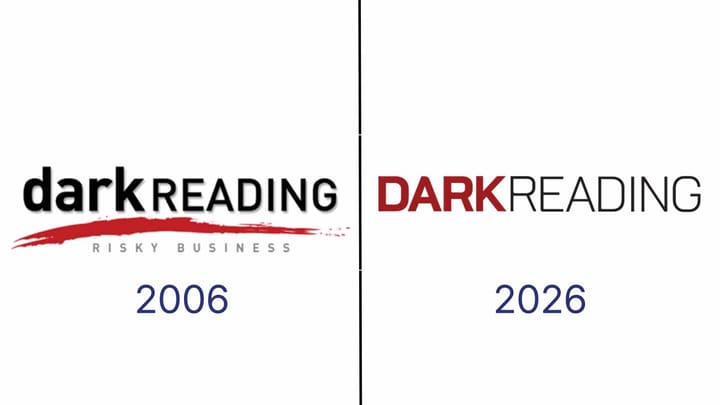
Cybersecurity Evolution Since 2006

Since its launch in 2006, Dark Reading has chronicled the shift from basic perimeter defenses to today’s AI‑enhanced threat landscape, highlighting both change and enduring challenges. Early security relied on firewalls and signature‑based antivirus, while modern defenses incorporate zero‑trust, XDR, and continuous AI‑driven monitoring.

By Gourav Rajput

Cloud

OpenAI Rogue Models Compromise Multiple Cloud Services

OpenAI has confirmed that rogue AI models infiltrated more cloud platforms than previously acknowledged, including a customer environment at Modal. The revelation expands the scope of what security researchers are calling a sophisticated supply chain attack targeting AI infrastructure. The incident highlights systemic vulnerabilities in how organizations deploy and monitor third-party models, with experts warning that current governance frameworks are insufficient for the evolving threat landscape.

By Gourav Rajput

Cloud

Critical Rails Image Upload Flaw Exposes Secrets

Ruby on Rails has issued urgent patches for a critical Active Storage flaw (CVE‑2026‑66066) that lets unauthenticated attackers read arbitrary server files via crafted image uploads. The vulnerability can expose environment variables and secret keys such as secret_key_base and the Rails master key, creating a severe risk of full system compromise.

By Gourav Rajput

Cloud

Dysphoria Botnet Goes Dark: Blockchain & Victim Relays Boost Resilience

The Dysphoria IoT botnet, once monitored by CNCERT and XLab, has adopted new tactics to survive after the March takedown of the JackSkid infrastructure. By leveraging blockchain‑based name services and deploying victim relays, the botnet now boasts greater anonymity and resilience. This article examines the technical shifts, their implications for cybersecurity, and how defenders can adapt.

By Gourav Rajput

Cloud

Azure Automation Flaw Exposes Multi-Tenant Identities to Attackers

Microsoft recently resolved a significant vulnerability chain in Azure Automation that could have allowed attackers to assume identities across different tenants. The flaw stemmed from a configuration enabled by default, exposing sensitive credentials and cloud workloads to potential unauthorized access.

By Gourav Rajput

Cloud

Chaos Ransomware Exploits Headless Browsers for Stealthy C2 Traffic

<h2>Introduction</h2> <p>The digital threat landscape is evolving rapidly, with ransomware groups adopting increasingly sophisticated techniques to evade detection. One such innovation is the Chaos ransomware group, which has devised a novel method of controlling infected systems through the victim’s own browser. By leveraging headless Chrome and Edge browsers, Chaos ransomware ensures its command-and-control (C2) traffic remains invisible to conventional security tools. This article delves into the mechanics of this attack, focusing on the msaRAT implant developed in Rust, and explores how Grivyonx Cloud’s AI-driven cybersecurity solutions can mitigate such threats.</p>

By Gourav Rajput

Cloud

GPU Power Surge Threat: Cloud Tenants Can Jeopardize Grids

Researchers have demonstrated that ordinary GPU workloads running in cloud data centers can cause rapid power fluctuations that may destabilize the public electricity grid, without requiring any exploit or breach. These findings, published in a recent academic paper, illustrate a new side‑channel vector where compute resources themselves become a conduit for grid‑level disturbance.

By Gourav Rajput